
Understanding GST (Goods and Services Tax) is no longer optional for businesses in India. Whether you run a local shop, an online store, or a service-based company, GST directly affects pricing, billing, and profit margin. This blog explains everything you need to know about GST in India 2025, including rates, calculation, and why businesses cannot ignore it.
What is GST?
GST is a single indirect tax applied on the supply of goods and services across India.
Before GST, businesses had to deal with multiple taxes like VAT, excise duty, and service tax. After GST, all of them were merged into one unified system, making taxation simpler and more transparent.
Types of GST in India
| Type of GST | Where it Applies |
|---|---|
| CGST – Central GST | Within the same state (central share) |
| SGST – State GST | Within the same state (state share) |
| IGST – Integrated GST | Interstate / online interstate sales |
| UTGST | Only in union territories |
GST Rate Slabs in India (2025)
| GST Rate | Category |
|---|---|
| 5% | Daily essentials |
| 12% | Standard household items |
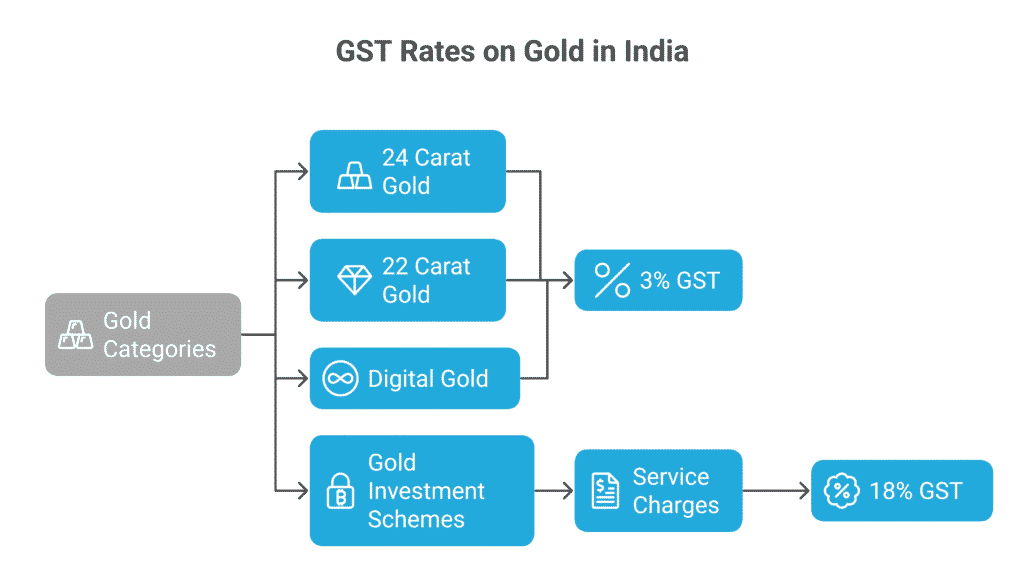
| 18% | Most goods and services (major bracket) |
| 28% | Luxury goods and sin items |
18% remains the most commonly used GST slab across India.
How to Calculate GST
A simple and clear method:
To Add GST
GST Amount = (Original Price × GST %) ÷ 100
Final Price = Original Price + GST Amount
To Remove GST
Original Price = Final Price × (100 ÷ (100 + GST %))
GST Amount = Final Price – Original Price
Who Must Register for GST?
- Annual turnover exceeds ₹40 lakh
- Selling products/services online
- Interstate business
- Importers / Exporters
- E-commerce suppliers
Benefits of GST for Businesses
- Same tax rules across India → easy expansion
- Input Tax Credit reduces tax burden
- Transparent pricing → more customer trust
- Fully online filing and payment system
- Eliminates hidden taxes → better profit planning
Common GST Mistakes That Can Trigger Penalties
- Charging wrong GST rate
- Late GST return filing
- Missing HSN/SAC code on invoice
- Not reconciling GSTR-2A with purchase records
Latest Updates & Trends in GST for 2025
- Automated e-invoice authentication
- AI-based GST reconciliation tools
- UPI-based GST payments
- Reduced penalties for first-time delays
Final Thoughts
GST is not just a tax system — it is a business survival rule in India. Companies that understand GST slabs, ITC rules and billing compliance will always save money and scale faster. Instead of avoiding GST, learn it and use it as a financial advantage.